



View All Posts
Climbing Outside This Summer: A Beginner's Bouldering Checklist
Education
|
June 11, 2026
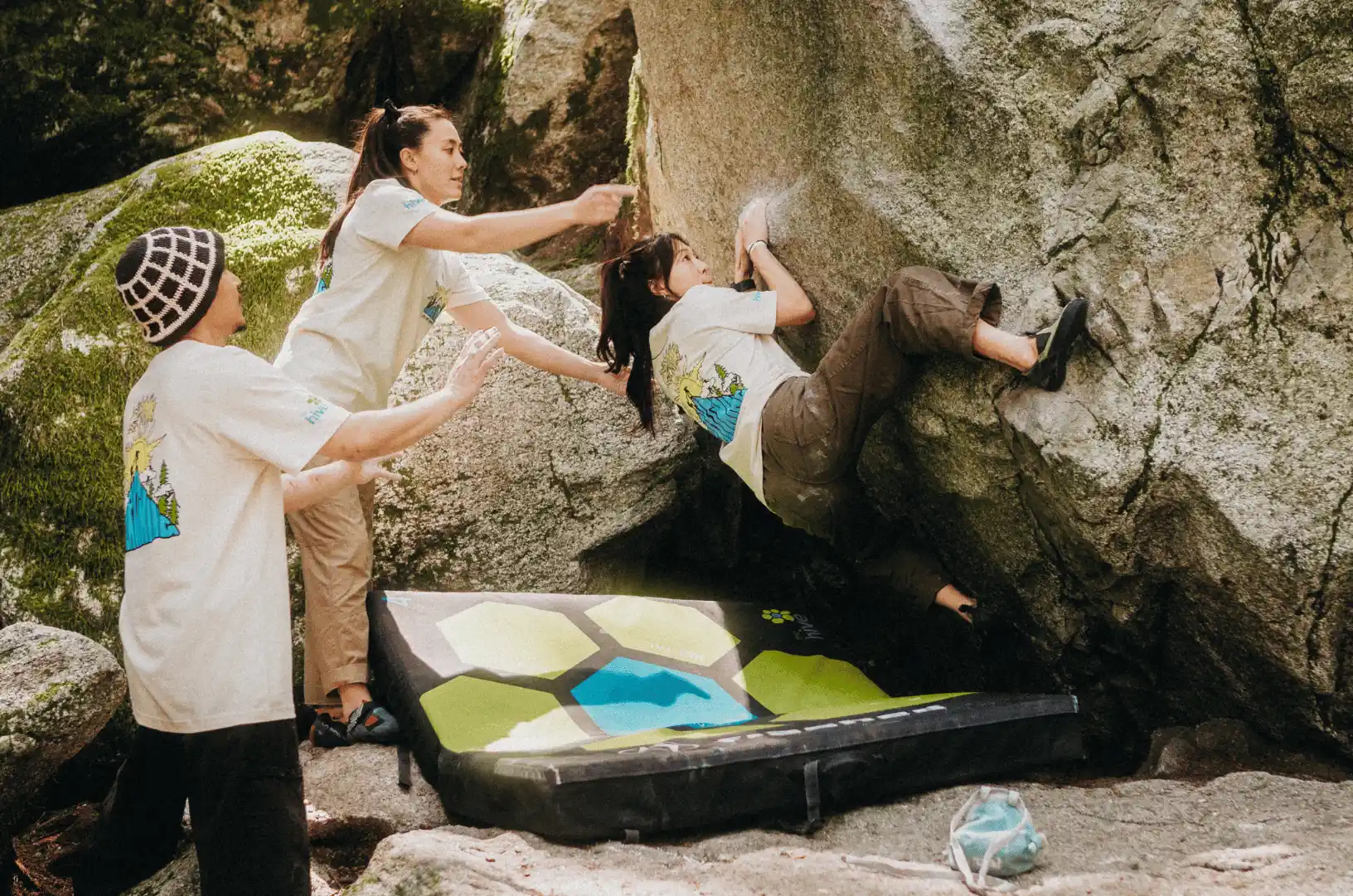
Thinking about taking your climbing outside this summer? Good choice. Fresh air, real rock, and a chance to explore some incredible places. Before you head out, make sure you've got the essentials packed. Here's a beginner-friendly checklist to help you feel prepared and avoid that parking lot moment where you realize you forgot your shoes.
WHAT TO BRING
Climbing Shoes
Climbing shoes are your main tool for actually climbing, and while you can technically get up a boulder in almost anything, they’ll make a huge difference when it comes to footwork and precision. Some people eventually end up with different pairs for indoors, outdoors, or specific projects, but to start, just bring what you’ve got and make sure they fit well.
Between climbs, you’ll want a pair of comfortable shoes to slip into while your feet recover, since climbing shoes aren’t exactly known for comfort. It also helps to keep the soles of your climbing shoes clean by avoiding walking around in dirt, which improves grip, helps your shoes last longer, and keeps the rock cleaner too.
Chalk & Chalk Bag/Bucket
Summer climbing usually means sweaty hands, and no amount of wiping them on your pants is going to cut it. Chalk helps absorb moisture to keep your grip solid. A chalk bag is convenient for individual climbs and can be worn around your waist, while a chalk bucket is a popular choice for outdoor bouldering sessions because it sits upright on the ground, holds more chalk, and is easy to share with friends.
Brush
A climbing brush is used to clean chalk and dirt off holds before and after your session. Cleaner holds mean better friction and better climbing for everyone. Most brushes are small, lightweight, and easy to carry in your bag or chalk bucket. It’s a simple tool, but it makes a noticeable difference when you’re trying hard outdoors.
It’s especially helpful on heavily chalked holds or popular problems where the rock can get slick over time. A few quick brushes can refresh the texture and make the climb feel closer to how it was meant to be.
Crash Pads
Gravity is undefeated, so bring a crash pad to create a safer landing zone outside. They help cushion falls and protect you from awkward landings on roots, rocks, and whatever else is hiding under the boulder. Before climbing, always take a moment to position your crash pad(s) carefully and make sure the landing zone is well covered.
The number of crash pads you need depends on the landing for the boulder you’re climbing. Flatter landings and shorter falls off of direct vertical lines might be ok with one or two pads, where taller lines, uneven landings and traversing climbs are better served with more pads. Finding friends with crash pads who know how to spot the climber is highly recommended!
Learn more about spotting a climber from this great video.
Guidebook
Whether it’s your first outdoor session or you’re exploring a new area, a good guidebook makes the day smoother, safer, and more fun. It helps you find boulders, locate specific problems, and navigate a climbing area. Most include maps, photos or diagrams of boulders, grades, approach info, and helpful details about access and parking. Before heading out, spend a few minutes reviewing and bring it with you.
Etiquette
Climbing in the boulders is a different experience than the gym, and a big part of what makes it special is the environment itself. Out here, you’re a guest in a shared natural space, so being a respectful and considerate climber means looking after the area so that everyone can enjoy nature and soak in their unique experience of climbing outside.
Keep music low or off, manage your belongings so others can share the space, and keep trails clear. Pack out any trash and be mindful of where you place belongings, including crash pads, to minimize damage to plants. One of our team recently realized they had been blocking a bumble bee’s door to her home with a crash pad partially covering some moss. Once moved, they got to see where she disappeared into, thankfully unharmed! A good reminder that these areas are shared with more than just other climbers.
Learn more about outdoor climbing etiquette in your guidebook or from the SAS website.
Warm-Up Gear
Don’t go straight from sitting in the car to trying hard moves. Start with a quick walk, some mobility exercises, or a few easy moves on a warm-up boulder to wake up your body and reduce the risk of injury. Portable hangboards or small crimp blocks with a rope can also be used for gentle finger warm-ups before getting on harder problems. The goal is to ease in gradually so your whole body is ready for the session ahead. You can do pre-hab, or rehab; speaking from experience, we recommend the former over the latter.
Skin Care & First Aid Kit
Real rock can be rough on your hands. Pack climbing tape to support vulnerable joints, protect your fingertips from wear, and hold things together when a flapper strikes mid-session. Antiseptic, nailclippers and even superglue may also be worth tossing in your bag — trust us on this one. While minor scrapes and tweaks are just part of the game, a basic first aid kit with band-aids, antiseptic wipes, and pain relievers is a small thing to carry for all-day comfort and peace of mind.
For skin recovery after your climbing day is over, a good hand balm or skin repair cream goes a long way in healing cuts and abrasions and keeping your skin healthy and ready to send. We love Rhinoskin for the job.
Snacks & Water
Outdoor climbing sessions have a way of stretching well beyond what you planned, especially on beautiful summer days. Bring plenty of water and easy-to-eat snacks to stay hydrated and maintain your energy levels throughout the day. Staying fueled helps you stay focused, recover between climbs, and make the most of every problem without feeling drained halfway through.
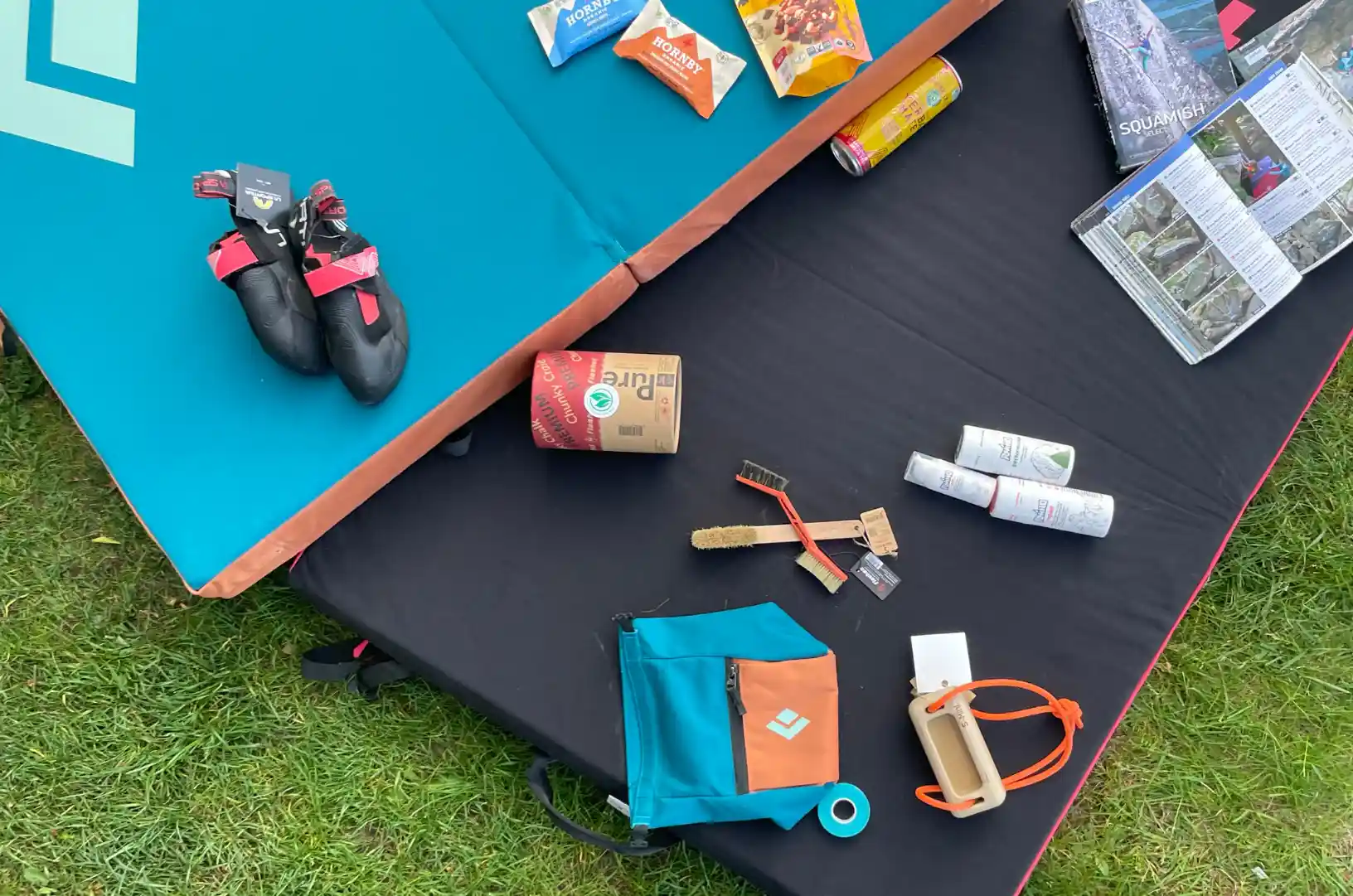
NEED GEAR? WE'VE GOT YOU COVERED
Bouldering outdoors is a great way to challenge yourself, connect with nature, and experience climbing in a whole new environment. With the right preparation and gear, you'll be set up for a great summer of outdoor adventures.
Stop by any Hive location to browse our selection of climbing essentials, including climbing shoes, apparel, training equipment, skin care, guidebooks, and more. Members enjoy 10% off all in-store purchases, so gear up for less and make the most of your Hive membership today.
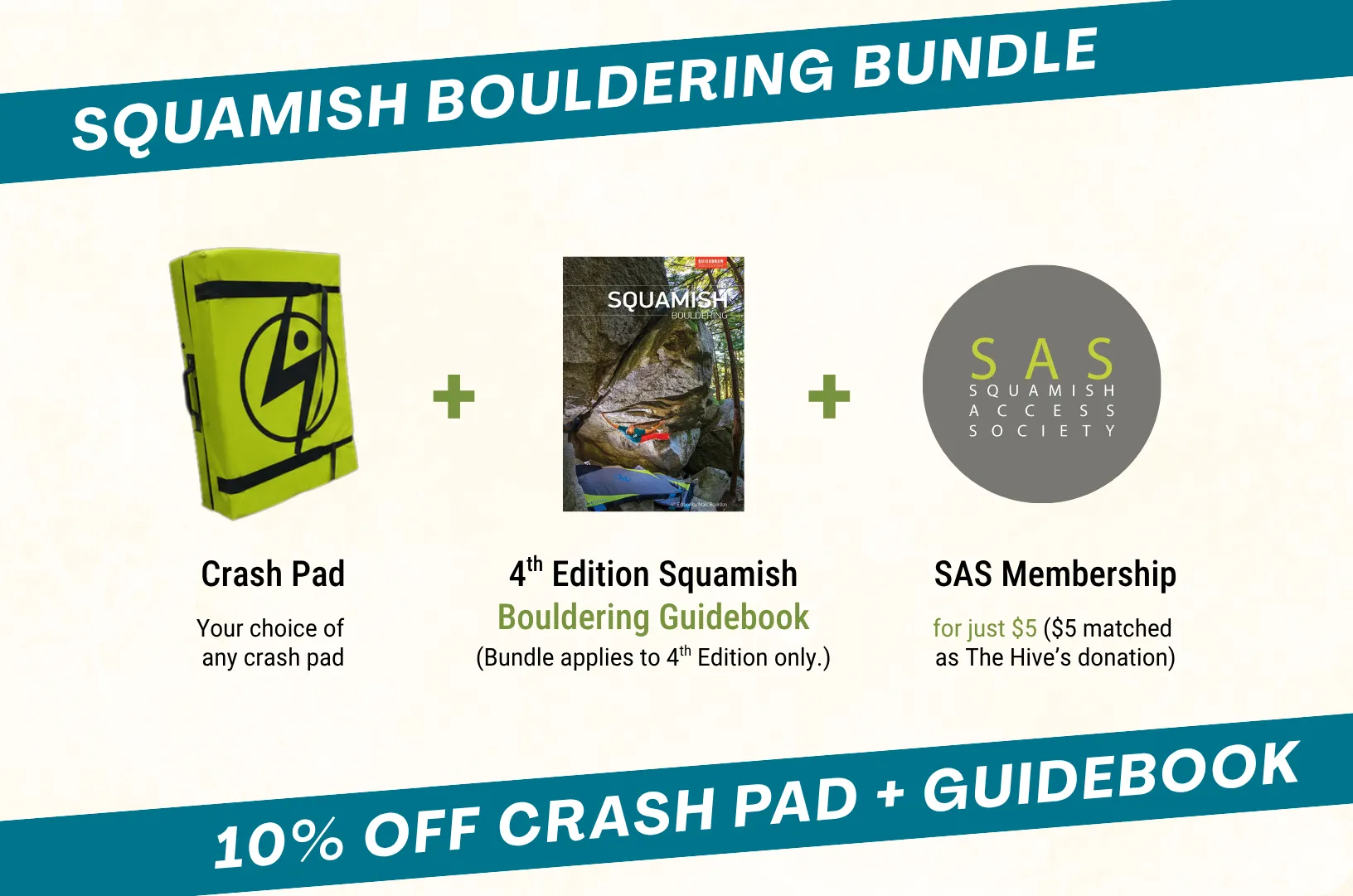
SQUAMISH BOULDERING BUNDLE
Heading to Squamish this summer? We've put together the perfect bundle to get you out there!
Pick up any crash pad and the 4th Edition Squamish Bouldering Guidebook and get 10% off both. You can also add a Squamish Access Society membership to help care for our climbing spaces and we’ll pay for half! You pay $5, and The Hive will match that amount with a direct donation to SAS. It's a great way to gear up, explore one of BC's best bouldering destinations, and support the organization that works to keep those areas accessible for everyone.

VISIT YOUR LOCAL HIVE
If you're making the jump from the gym to the outdoors, don't be surprised if things feel a little harder at first. Real rock is less predictable and outdoor grades often feel different from what you're used to indoors. But don't let that discourage you. Enjoy the process, explore new places, and build your skills one adventure at a time.
Have questions or need help picking out the right gear? Visit us at any Hive gym and our helpful staff will be happy to help you find everything you need for a great day out. Find your nearest Hive location using the link below.
See Hive Locations


